Tension Lock Couplers: Where They Work and Where They Don't
Tension locks are the default OO coupler for good reasons. They're also the source of half the random uncouples on a club layout. An honest read on what they do well and where they fall down.
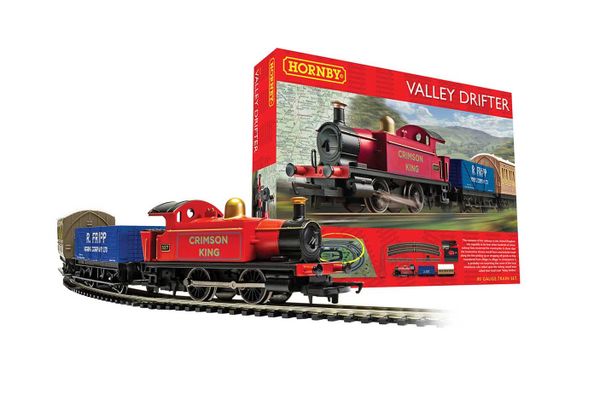
The tension lock is the default OO coupler. Hornby fits them. Bachmann fits them. Dapol fits them. Practically every wagon and carriage on a UK club layout is wearing one. They work. They’re cheap. And most modellers eventually hit a moment where they wonder if they should rip them all out.
That’s almost never the right move. Understand what tension locks actually do well first, where they fall down, and which problems are the coupler’s fault versus the track work. Once you can tell those apart, you’ll know whether to rip them all out, swap a few for Kadee, or just standardise on one brand and get on with the layout.
Where they earn their place
A tension lock holds two vehicles together with a pair of latching hooks. The forward motion of the loco pulls the train and keeps the hooks loaded. On a vaguely flat track, with stock from one manufacturer, that’s reliable.
The other win is universality. Every RTR wagon comes out of the box ready to couple to the next one. No conversion, no fettling. The factory has already aligned the height with the NEM 362 socket standard, which is the small rectangular pocket on the underside of modern stock that the coupler clips into. A first layout with thirty wagons on it would cost a different kind of money to convert wholesale.
They also tolerate tight curves. The hook has enough swing to hold together around a second-radius curve, which is 438mm, which covers most train sets. That same swing is what produces the visible gap between vehicles, but we’ll get to that.
For a child’s set, a Christmas layout, or a roundy-roundy that just runs trains, the tension lock is the right answer.
Where they fall down
Three things go wrong, and they tend to show up at the same time once the layout starts getting interesting.
Random uncoupling. The hook only needs about a millimetre of vertical face to hold. If your stock varies in coupling height, and it does (across manufacturers the bar height ranges roughly 9mm to 13mm above the sleeper), the hooks ride over each other on any bumpy section and the train splits. This happens most often when propelling, because there’s no tension keeping the latches loaded.
Brand mixing. Hornby’s small tension locks have a slightly longer hook and a thicker NEM prong than Bachmann’s. Both are NEM 362. Both look identical at a glance. Both are visibly different the moment you compare them on the bench. Mix them in the same train and you’ll get random splits even on flat track. Standardise on one brand per rake and most of the chaos disappears.
Appearance. This is the one nobody can fix. A tension lock is an L-shaped lump of black plastic between every vehicle on the layout. The gap is wider than scale. The hook is the most prominent feature when you photograph a train side-on. If you’ve put six months into weathering a rake of mineral wagons, the couplers undo half the work.
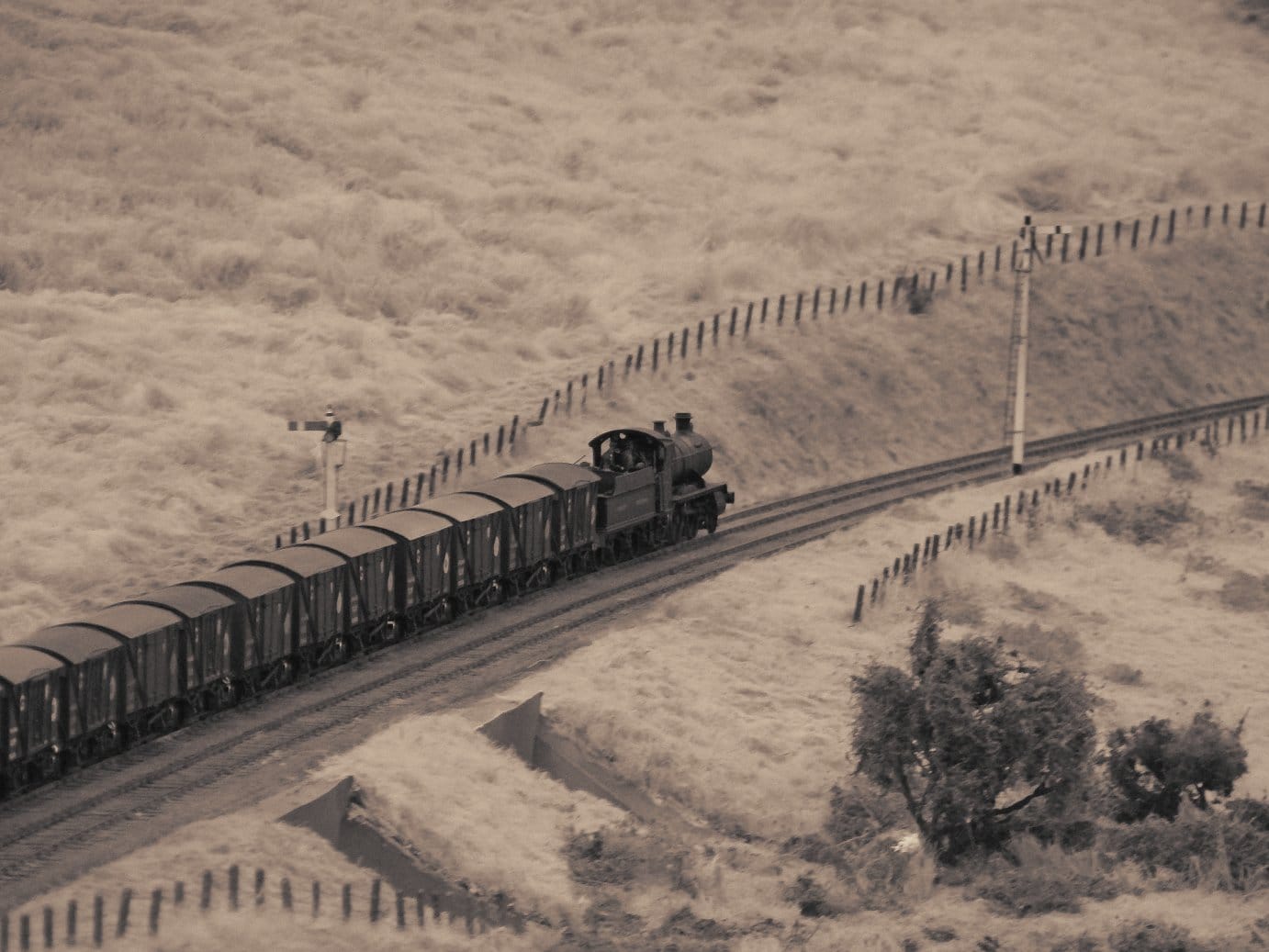
Pendon Museum’s OO layout. Couplers are the most prominent thing on every side-on view of every wagon. No amount of weathering will hide them.
So what do you actually do?
For a starter layout, a continuous-run, or a child’s set, nothing. The tension lock is doing its job and a wholesale conversion is a waste of a Saturday.
For an exhibition layout, a shunting plank, or anything you’ll photograph for the Facebook group, the tension lock is the wrong tool. You need a coupler that uncouples reliably with a magnet, holds together when propelling, and looks closer to the prototype.
Which is where Kadee comes in. In Part 2 I’ll cover what’s actually involved in switching to Kadee. The conversion is less hardware than the YouTube tutorials suggest, but the cost adds up faster than they let on.