Switching to Kadee Couplers on OO: The Real Cost and the Actual Process
Kadee couplers are reliable, look closer to the prototype, and uncouple on cue with a magnet. They also cost more than the YouTube tutorials let on. The real numbers and the actual conversion process.
The case for Kadee comes down to three things. They look closer to the prototype. They uncouple reliably with a magnet under the track. They hold together when you propel a train. Part 1 covered why tension locks fall short on each of those. This is the conversion.
If you start on a short bench and finish the same evening with one rake of show wagons running on Kadee, you’ve done it right. If you decide to convert your entire fleet in one weekend, you’ve made a mistake.
What you actually buy
Kadee #17, #18, and #19 are all NEM 362 couplers. Same hook geometry, same fit into the NEM pocket. The only difference is shank length:
- #17 short (7.11mm)
- #18 medium (8.63mm)
- #19 long (10.67mm)
The right one depends on whether you’re fitting it to a wagon (usually #18), a coach with a deeper buffer-beam recess (#19), or a small shunter where the buffers sit very close to the body (#17). Most UK OO modellers start with Kadee #18 and adjust per vehicle.
Kadee sells them in packs of 2 pairs. That’s four couplers per pack, enough for two wagons. At The Model Centre and Gaugemaster the #18 and #19 packs run £13 each. Amazon UK carries the same range.
You’ll also want a #206 height gauge (~£15). Without it, you’ll fit Kadees that don’t reliably trip the magnet or that buffer-lock on tight curves, and you’ll spend more time troubleshooting than converting.
The cost reality
Do the maths on a small fleet. Twenty wagons, eight coaches, six locos, two DMUs. That’s thirty-six vehicles. Each needs two couplers. Seventy-two couplers, eighteen packs, £234 in couplers alone.
Add the height gauge (£15) and a couple of #322 between-the-rails magnetic uncouplers for the shunting plank (£20 each, so £40 for two). The all-in for a small layout’s worth of conversion is somewhere north of £290 before tools.
That’s not the YouTube tutorial number, which usually costs the couplers and forgets the gauge, the magnets, and the pack-of-2 maths.
The actual swap (NEM 362 stock)
The good news. For anything made post-2010 in OO, the conversion is genuinely pluggable.
Hold the wagon upside down. Pinch the existing tension lock at the base of the prong. Pull straight down. It comes out clean, no tools.
Take the Kadee out of the pack. Squeeze the barbs together with your fingers. Push it into the same NEM pocket until you feel it click. Two couplers per wagon means about two minutes of work, plus the time to find a small enough screwdriver to lever the body off if the maker hid the NEM pocket inside.
Then put the wagon on the height gauge. If the coupler sits high or low against the reference, swap to a different length. That’s why you keep #17 and #19 in the drawer alongside the box of #18.
For pre-NEM stock (older Hornby tender drives, kit-built wagons, anything from roughly before 2008), the conversion involves a Kadee draft gear box, a small drill, and some Plastic Weld. That’s the longer evening. The Kadee European Conversion page links to forum threads covering specific older models in detail.
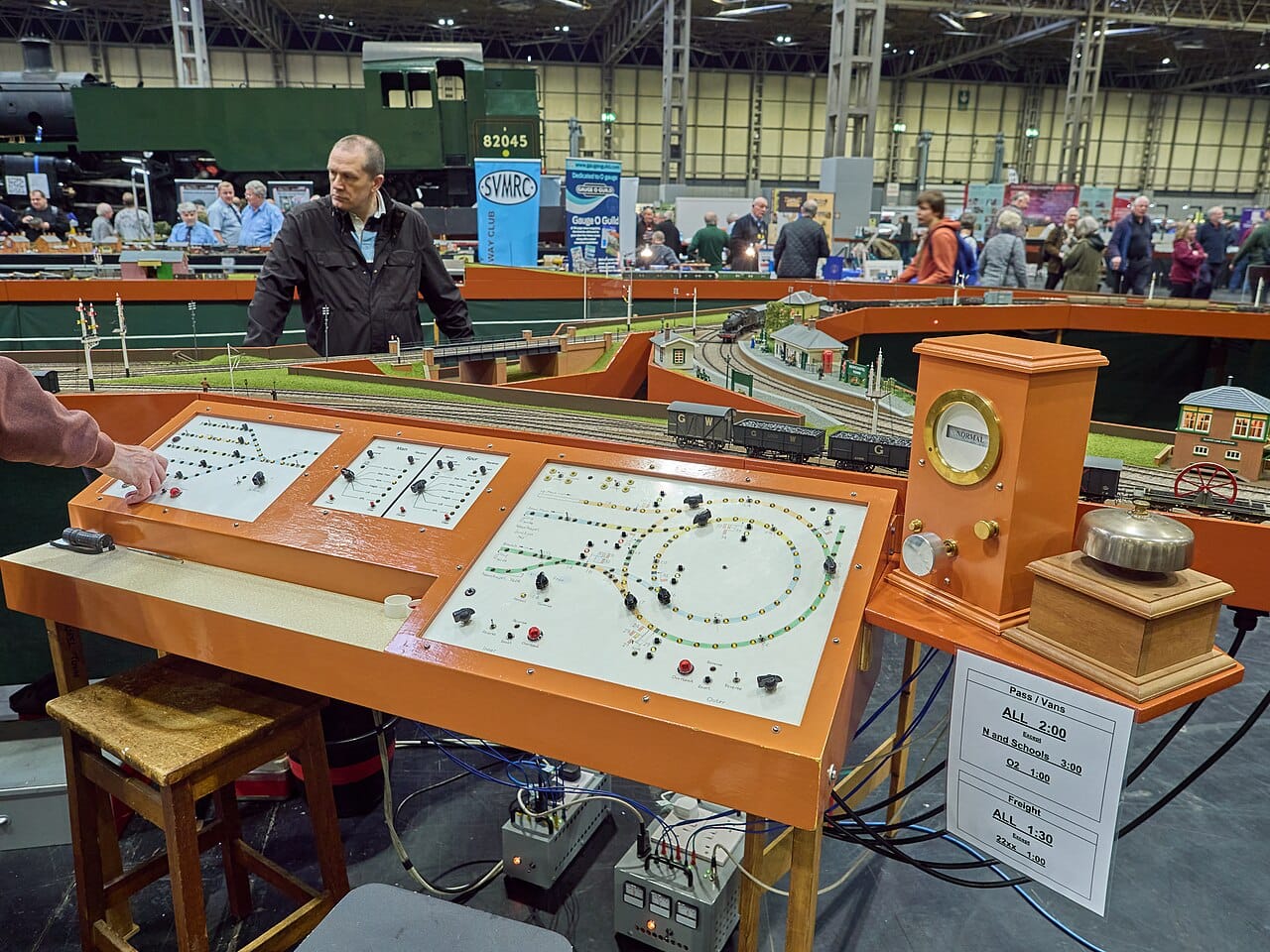
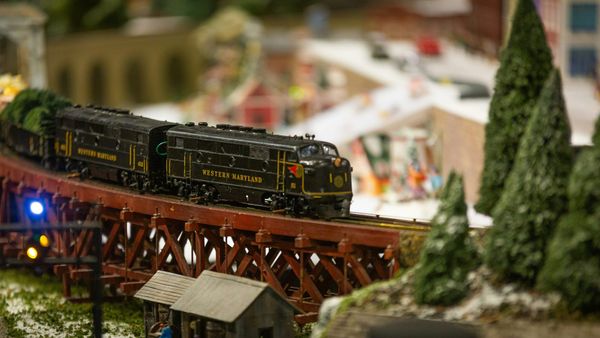
A typical OO rake. Pick one of these and convert it before you commit to the whole fleet.
Where to start
Don’t convert your starter set. Don’t convert the kid’s Christmas trains. Don’t convert anything that just runs round the loop reliably.
Convert one rake. Pick the rake you photograph. The mineral wagons. The exhibition coach set. The pannier and its train of spoil wagons. Get those right with the height gauge on the bench. Run them for an evening with the magnetic uncoupler. Once that one rake is coupling cleanly and uncoupling on cue, you’ll know whether the rest of the fleet is worth the £290.
Most of the time, it isn’t. You convert six rakes, the show stock, and call it done.